Week 9: From A Can – White Clam Pizza with a can of rosé

For this next challenge, “From a can,” I decided not to indulge in my favorite pizza standard of artichoke red pie, despite the use of both canned tomatoes and artichokes. Instead, I took on a pizza that I had never dreamt of making: white clam pizza. URBN Coal Fire Pizza/Bar in North Park, San Diego boasts a New Haven-style, thus features a classic clam pie. It’s the perfect pizza to order for lunch on a Sunday with a glass of Provence rosé.

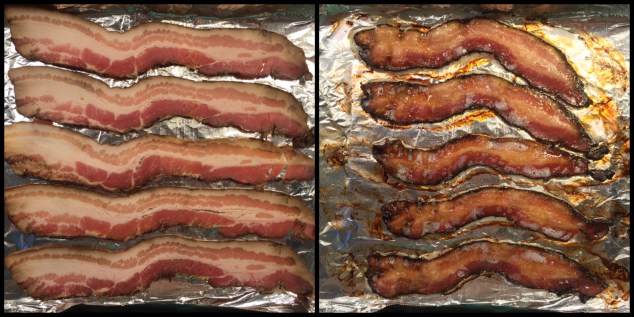
I generally operate under a zero-seafood-from-a-can policy when I cook so I’ve decided to slap on some bacon for a bit of flavor insurance.
JPEG image-816B75937432-1

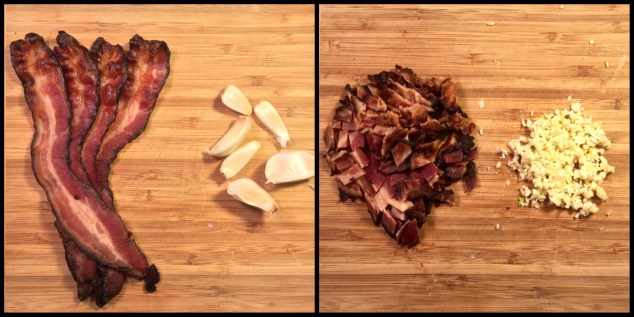
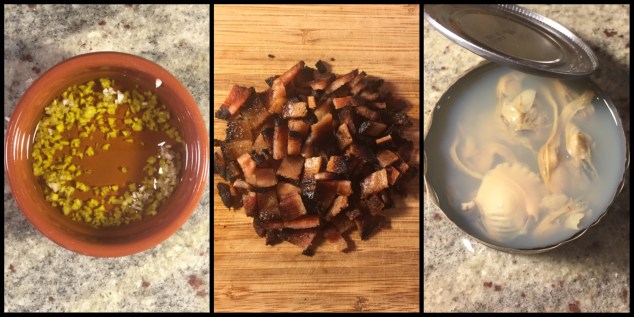
Bacon offers unity between land and sea and, for those iffy about clams on a pizza, it can become the focal point of the experience.
JPEG image-788B180C7962-1

Garlic is the perfect aromatic to go alongside seafood so an abundance is used to coat the base.

JPEG image-F5E626A4E1E7-1

Classically, fresh littleneck clams are used but since freshness is already being shunned for the sake of this challenge, the clam of choice is not a point of concern.
JPEG image-8600C3F43778-1

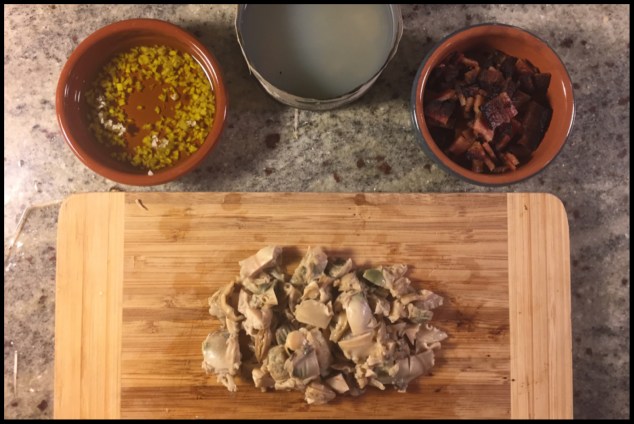
Ignoring how closely these clams resemble ID4 aliens sealed in an Area-51 tube once unveiled, these clams need to be coarsely chopped with the juice reserved for extra flavoring.
JPEG image-C3C0657DB819-1

Once outside of their murky clam juice home, these puppies look ready to hop on a pizza and snuggle up alongside some bacon.
JPEG image-DE0916D54A3D-1

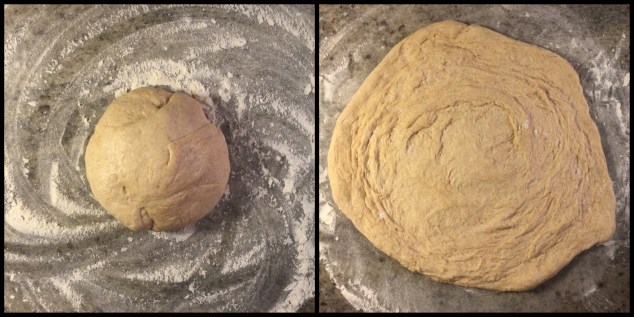
The dough used is a 3:1 bread and whole wheat flour, which was rolled out as thinly as possible while the oven climbed up to a maxed out 550°F. When freshly made, this dough can insert a subtle yeasty sweetness in the pizza’s overall flavor.

JPEG image-E2303CD4082B-1

Using olive oil & garlic as the sauce, mozzarella provided a base of cheese and the protein followed with parmesan grated overtop. Most importantly, a couple spoonfuls of clam juice were sprinkled over evenly before popping this bad larry into the oven for 7-10 minutes.

JPEG image-CD07B18C5A9D-1

In keeping with theme, a can of Alloy Wine Works – Grenache rosé, Central Coast, California was the pairing of choice, harking back to my URBN clam pizza & rosé days. With underripe raspberry and white strawberry notes balanced by the hint of actual sweetness in the wine, this wine tasted like the can’s own promising of sour patch kids. The inherent saltiness of the pizza even further emphasized the fruit of this rosé but it was the wine’s waxy texture and fuller body that helped manage bursts of smoky bacon.

JPEG image-5BAED5A0789D-1

The briny flavors were well integrated with the garlic and bright, tangy parmesan with the occasional bite of sea water surprise that is likely inevitable with a dish like this. The pizza kept pillowy texture that stayed moist and fresh thanks to the addition of the clam juice on top, without which this pizza would be lost.

JPEG image-06A582C1A983-1

Nailed it.
 

Week 8: Japanese – Unagi, scallion & macadamia nut pizza

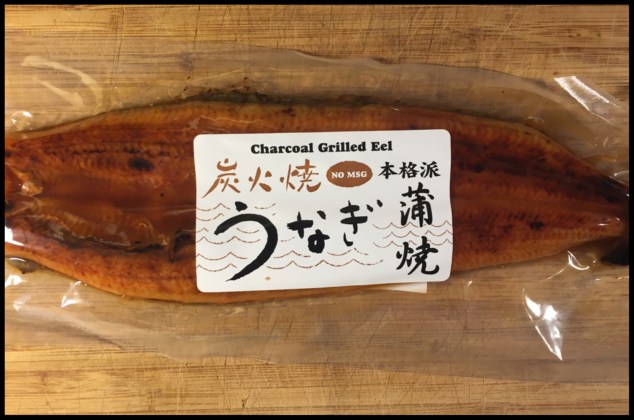
Unagi: one of the great standards to be unhesitatingly penciled in on a sushi order sheet. With their own dedicated sauce, those puppies don’t require a hit of wasabi to jazz up the flavor rollercoaster. They are a closed-system of deliciousness, which is being tapped for this week’s kitchen challenge: Japanese.

The local Japanese grocery store keeps a range of inspiring ingredients, anything from yuzu to octopus arms, for Japanophiles to get giddy about. Despite my Chinese heritage, I get a little dizzy with excitement over Japanese culture and cuisine. While shopping, a load of unrelated foodstuffs, including a large bottle of Kewpie mayo, find a new home in my kitchen along with the freshwater eel I originally came for. Even still, this pizza will remain a simple but moderately snazzy unagi experience. (And yes, this entire paragraph was built to prop up a single irrelevant gif.)

Unagi Pizza

JPEG image-730DED8D0D5D-1

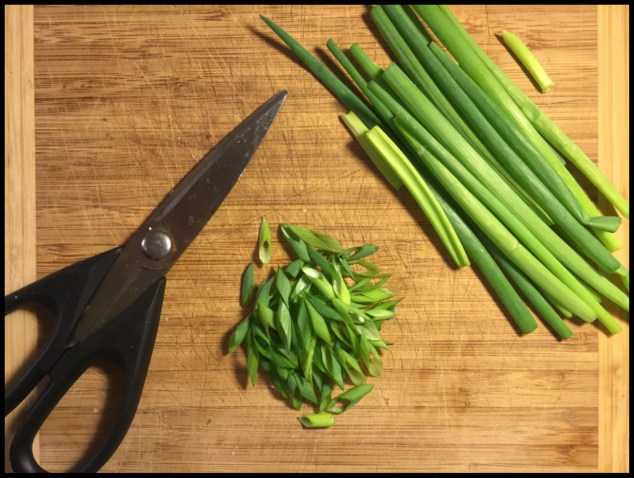
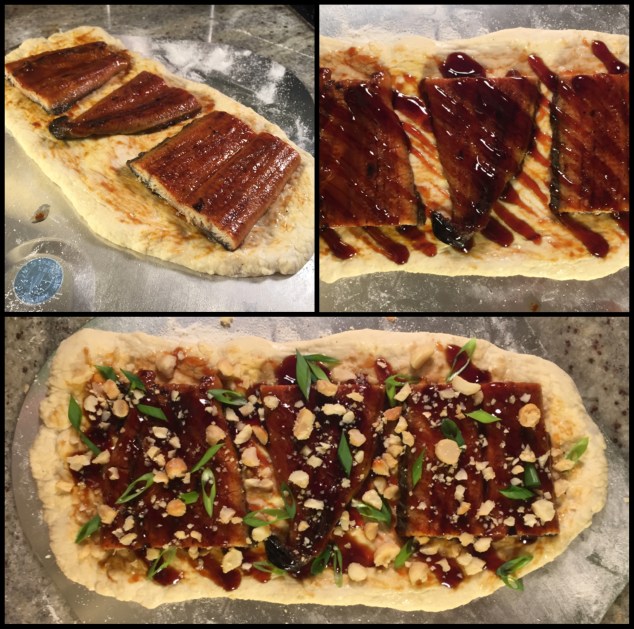
To complement the eel, I decided on including both traditional & non-traditional toppings. Scallions were chopped coarsely with half joining the eel during the cooking process while the other half for garnishing afterwards. This would offer two types of textures and a bit of extra complexity with the range of fresh and cooked onion flavors.

JPEG image-4EF9E09A01E3-1

Cheese bowed out of this project and instead I substituted the milky creaminess of macadamia nuts, which were lightly pummeled with mortar and pestle.

JPEG image-89581C3F8533-1

To craft this pizza appropriately, the dough needed to be a bit more oblong in shape, stretched out into a more rectangular platform so as to not require the usual circular symmetry in flavors.

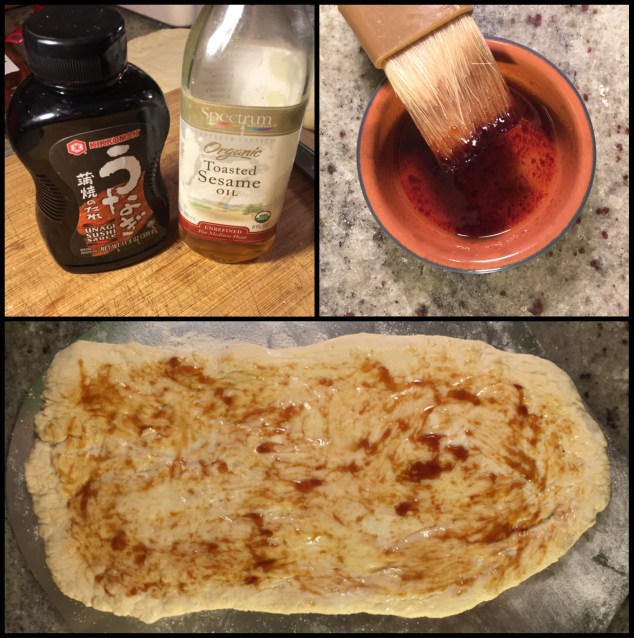
While eel sauce would make-do as a sauce, it needed a bit of thinning out. For an extra bump of flavor, I blended in sesame oil and slathered the mixture right onto the dough with a brush.

JPEG image-D1E78F704340-1

Though this dough seems perfectly eel-shaped, instead the eel was chopped into three pieces to fit evenly side-by-side to create more uniform pizza slices.

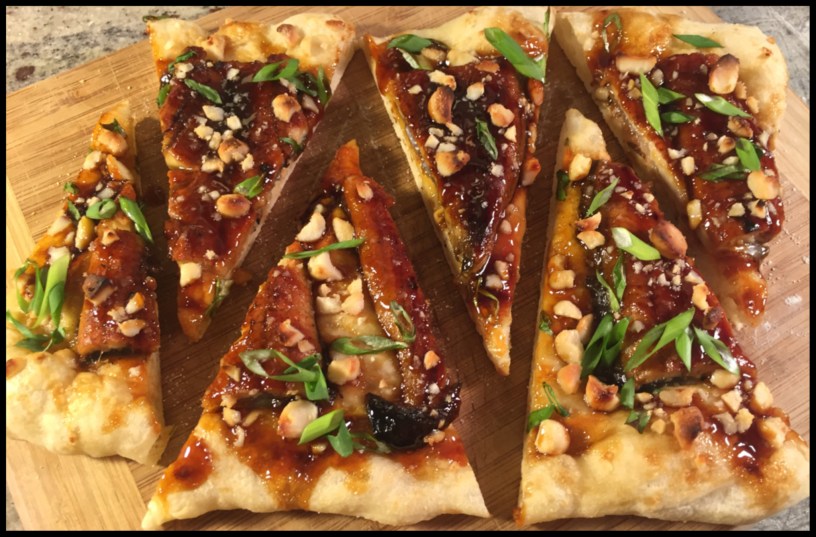
JPEG image-E5EB6B3E8ADD-1

Due to the high oven heat, the macadamia nuts threatened to crisp up beyond what might delight the palate. Next time, it would be wiser to wait until the final minutes of baking to add the nuts on top. Luckily, any possible off flavors from over-toasting did not distract from the larger flavors of sweet, tender unagi.

JPEG image-761CA8C759E6-1

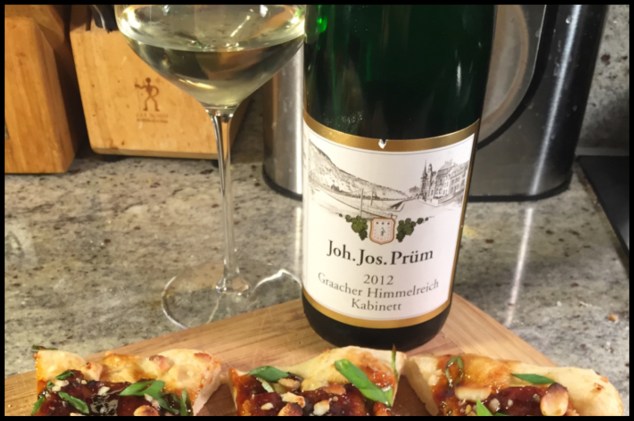
A wine fit to go with both aspects of sweet and savory in this pizza would need a touch of sweetness of its own to balance this pairing. Joh. Jos. Prüm – Riesling, Kabinett, Graacher Himmelreich, Mosel, Germany 2012 is refreshingly mineral-tinged with lime, green apple and peach offering a range of vibrant aromas that sing loudly on its own. While Kabinett in style, this Riesling keeps the touch of sweetness needed to manage the big flavors of unagi and eel sauce. Each sip energizes the palate to chase those unagi flavors while each bite of pizza begs for another taste of wine. It’s a near-perfect union and an experience worth recreating, which makes this metatheme project a win.

Week 7: Air – Basil Foam Pizza Topping

For this week’s challenge, I dedicated some time to learning about modernist techniques for making foams and emulsions. After combing through stacks of online literature (like this, this and this), I managed to gain little confidence that some chemical tinkering would go without failure. And with that, I cannonballed into this project without concern for the outcome and came out lucky.

Basil Foam

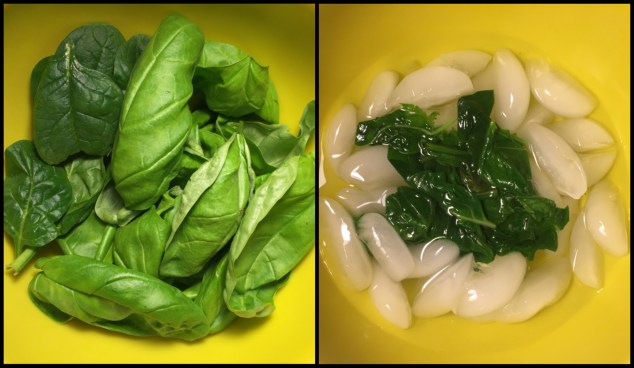
To begin, I blanched fresh basil leaves, and a few spinach leaves for extra color, before dousing them in an ice bath.

JPEG image-ACC4121DF625-1

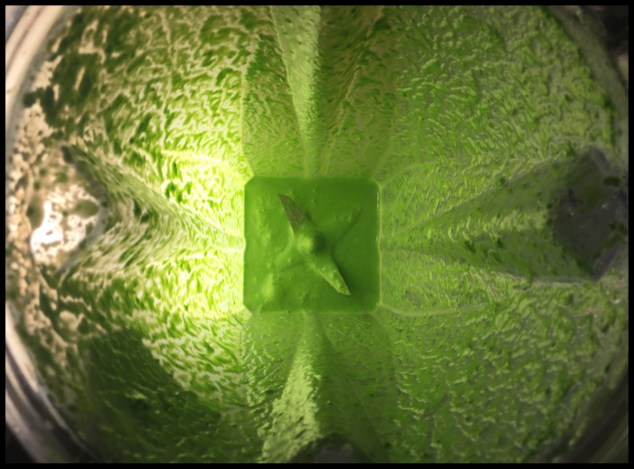
After wringing out the excess water from the leaves, I blended the leaves with a pinch of salt and a small amount of half and half, adding just enough to create a smooth liquid. I kept the additional cream to a minimum so as to maintain the concentration of both color and flavor in the resulting foam. This step required a few pauses to scrape down the sides of the blender for consistency, which probably would not have been as dramatic a task if I had made a bigger batch.

JPEG image-AF109A3BAC87-1

Instead of leaning on any one particular technique discussed in the molecular gastronomy websites, I went for a combo punch of ingredients that would undoubtedly turn this mess into some kind of foam. Any foam.

JPEG image-6CB4FF9F4DE8-1

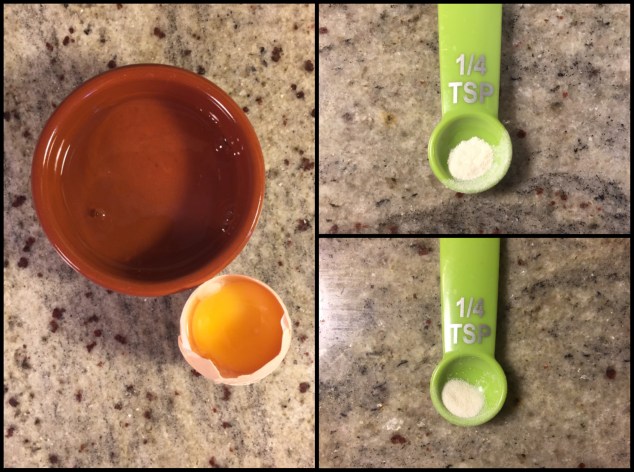
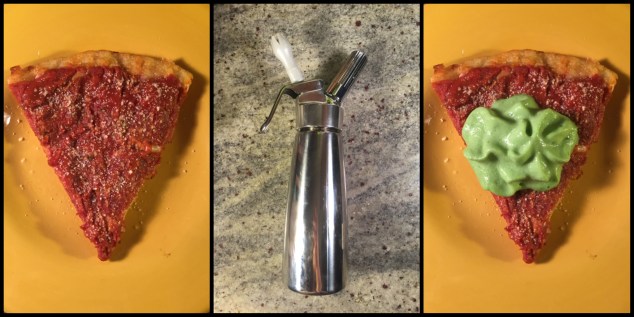
Adding in 1/16th a teaspoon of xanthan gum as a thickener and an egg white of one egg and 1/16 teaspoon of agar agar as stabilizers, I gave the emulsion one last blend before passing it through a sieve into an iSi whipped cream dispenser. After unloading two cartridges of nitrous oxide into the canister, shaking vigorously with each delivery, the iSi took a nap in the fridge while pizza was made.

JPEG image-3F1DF0B395BE-1.jpeg

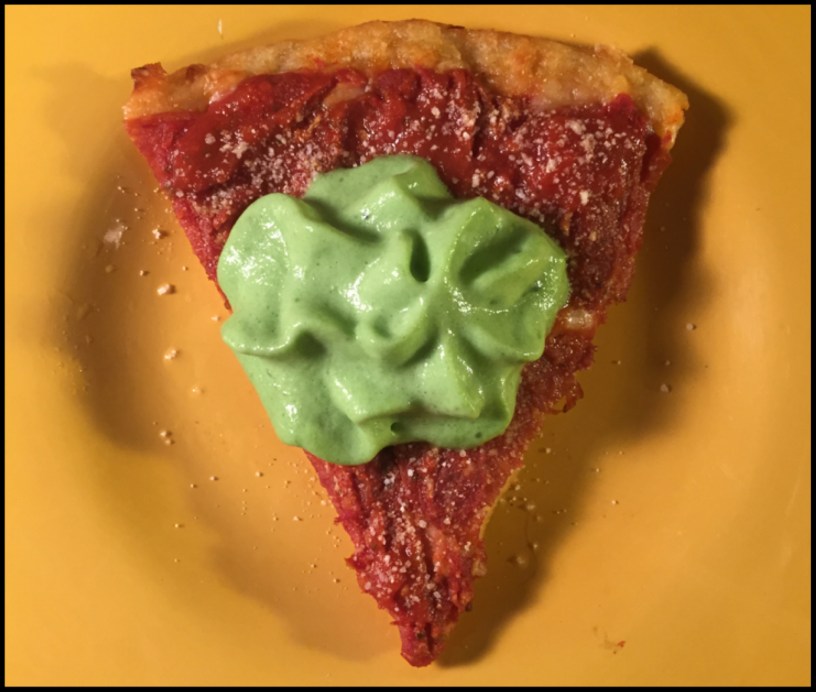
Basil works very well alongside tomatoes so I decided to flip this pizza onto its bottom and create an upside-down pepperoni pie with mozzarella spread right over the crust, followed by pepperoni and then heaps and heaps of freshly-made tomato sauce. Once out of the oven, the pizza was doused with parmesan and cooled slightly before basil foam was applied in the hopes of not deteriorating its delicate nature too quickly.

JPEG image-98413716BF70-1

The foam came out light, fluffy and of a satisfying shade of ecto-cooler green. The flavors remained fresh and leafy in its new form, which made a slice of pizza look like a crisply-wrapped present. Even when melted into alien goop, the foam was worthy of using as a dip for crust.

The pairing

With more herbaceous flavors to consider on a standard set of toppings, I wanted a wine to reflect the same green quality found on the pizza. Varietally known for its green bell pepper notes, Cabernet Franc from Bock (Hungary, 2011).

JPEG image-4F21BD74BE71-1

The wine was remarkably plush and easy to get along with, primarily flaunting juicy black cherry and raspberry notes with hints of chopped mushroom and fresh soil interlaced. Together with the pizza, the soft yet powerful style of this wine was able to match the richness of the tomato sauce and provide a backdrop of dark berry fruitiness for the herbaceous flavors to play off of. Not the pairing that was expected, but one that worked nonetheless.

JPEG image-958EDF549C46-1

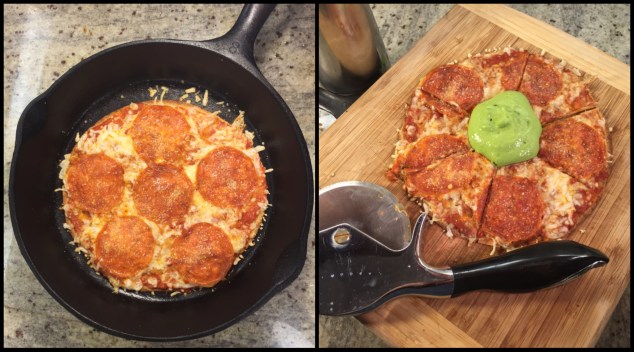
With a canister of basil foam hanging out in the fridge, even some everyday cast iron tortilla pizza can use a little pizzazz. Though the classic remain classics, I found myself continuing to reach for the iSi for that extra hit of flavor. It seems I’ll have to mark this challenge down as a success.

Week 6: Finger Foods – a trio of pizza snacks

Exploring the miniature world of pizza-inspired finger food, as decreed by this week’s challenge, I decided to experiment with three different styles to see how far whimsy could take me. To begin, I chose to bring to life a mediocre pizza cone I once experienced at a night market but this time it would be tastier and in bite-size form.

Pizza Cones

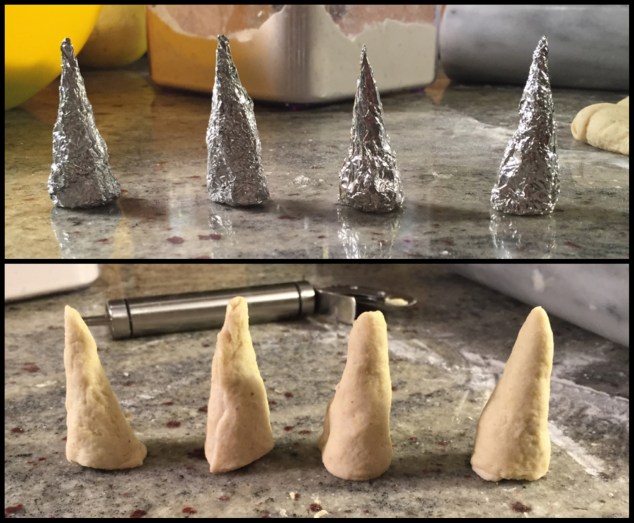
Ideally this project would begin with an army of small cone-shaped, oven-safe items such as a basic frosting tip, at the ready. If this is not the case, the next best option is to create a set of Cones of Dunshire out of foil.

JPEG image-3BD190DFAAA6-1

Using room-temperature pizza dough, I rolled out thin, roughly-shaped triangles that were wrapped once around each cone. The cones were baked pointy side up until browning and gently release from mold when cool enough to do so.

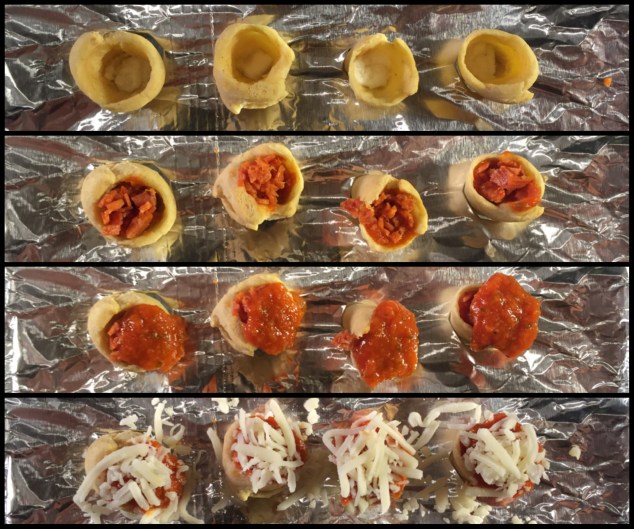
To prep for the next stage of cooking, foil was wrapped tightly around a baking dish and gently poke tiny, well-spaced holes for the cones to sit upright in. These cones were filled with a modest layering of fresh mozzarella, marinara sauce, finely chopped pepperoni, more sauce, and shredded mozzarella to top.

JPEG image-4CD72F78BFBB-1

These were placed back in the oven for another 5 minutes and served in the very same delicate DIY foil holder as before.

JPEG image-7FE202479377-1

While the presentation is lacking a bit of panache, these small treats have potential for greatness in the future, especially if I combine the piping mousse used in the following finger food.

Pepperoni Cream Gougeres

Gougeres are small pastries that create little air pockets when they puff up in the oven, providing space for a creamy treat to be piped in.

JPEG image-9A151BCF907D-1

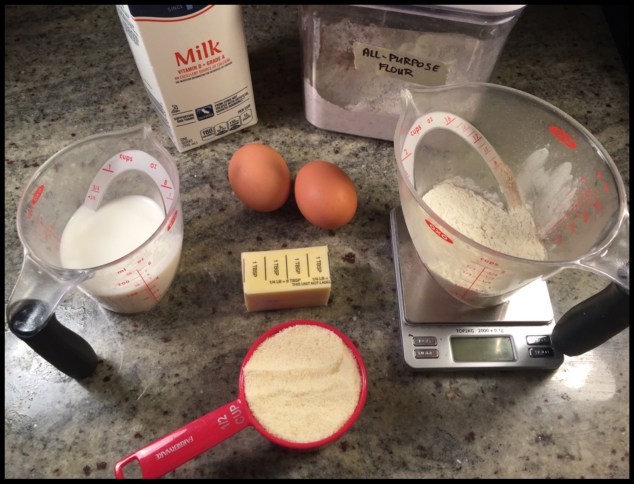
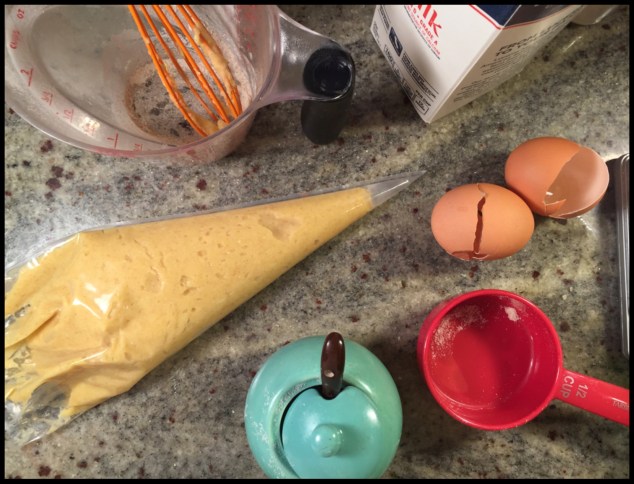
While these might be considered the most successful of my experiements, I encountered many difficulties along the way. Using a very basic recipe provided by the Addison kitchen, I had a batch ready to go within minutes.

JPEG image-C0372E3FD6C8-1

Boiling the butter and milk together, I added the flour all at once and beat the resulting goop for three minutes. Off heat, I whipped in the eggs one at a time and then added parmesan and season with salt to taste. This was then added to a pastry bag, though a sturdy ziplock bag would make a fine enough substitution.

JPEG image-91BF30592A1B-1

Piping out small swirly poops was my first mistake. The shape created at the base of each pastry did not allow half the batch to rise with the appropriate amount of spacing within. It is better to start with a fat blob as the base, swirling towards the top to avoid a Hershey kiss shape.

JPEG image-476D9246B533-1

Each batch took around 20-25 minutes in the oven before crispy and light. Midway through the first batch, I noticed the color of the gourgeres remained quite pale so I pulled out the lot and painted on a sheen of whipped egg whites for some last minute coloration in the oven. The trick seemed to work so I applied the egg whites to the second batch as well.

While waiting for the pastries to finish baking, I pulled together some pizzaesque ingredients laying around in the kitchen for a haphazard emulsion. The final makeup of this concoction involved a blend of tomato chunks, mozzarella, sour cream, cottage cheese, half and half, crushed red pepper, salt, pepper and crispy pepperoni. This was added to its own pastry bag and piped into the cracks found along each puff pastry to fill the gap within.

JPEG image-5EA87828C3AB-1

At first I didn’t mind the chunky texture the pepperoni provided until the pastry bag tip kept getting clogged and splattering comically all over the kitchen from force and frustration. Had I made a bigger batch, the end texture may have been smoother as the pepperoni would have a chance to become completely emulsified. In addition, I would avoid using firmer cheeses so that the mousse remains creamy when reheated. Another couple rounds of practice should transform this puppy into a winner in a crowd.

Mini Pepperoni Pizzas

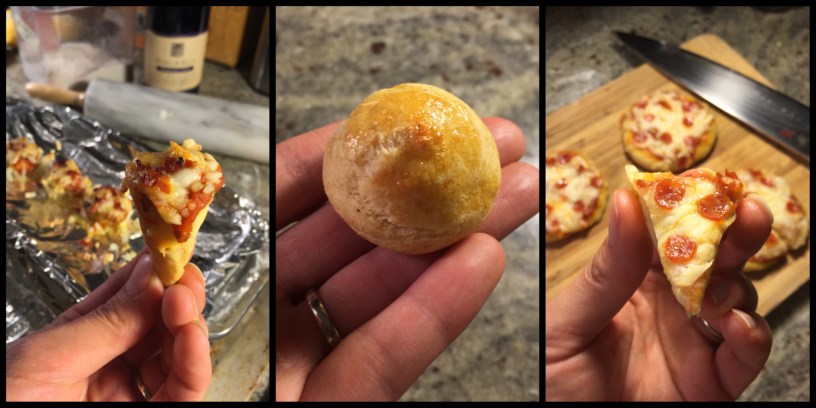
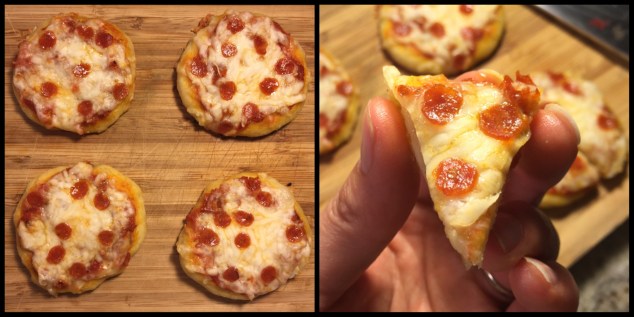
Despite my certainty that this would be the least exciting aspect of my finger food experiments, I devoted a good half hour into this project to use up some leftover dough and ingredients. The majority of this half hour was spent meticulously cutting regularly-sized pepperoni into miniature pepperoni pieces, all for the cutesy look of it.

JPEG image-F997ABDC27C3-1

From here, the dough was separated into equally-sized balls that, when pressed into shape, resulted in 3-inch rounds. And from here I built the pizza as I would any other.

JPEG image-AFA90221AAD1-1

The pepperoni scraps from earlier did not go to waste as they were chopped up and placed over the sauce and under the cheese when designing the final toppings.

JPEG image-D1CE2903E83E-1

Edible? Yes. Cute? Sure. Worth it? Eh.

The Pairing

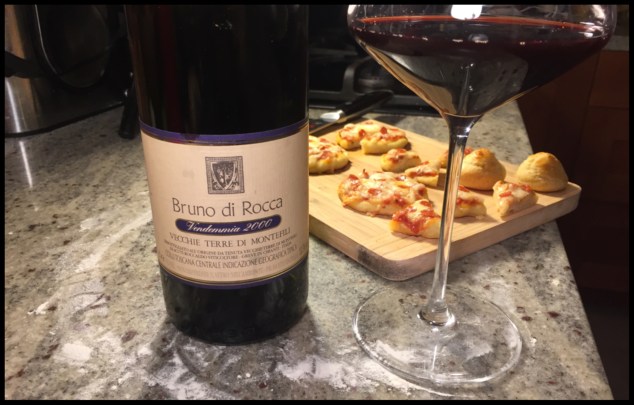
While the flavors of these three treats were very similar overall, I would still need a wine broad enough to span the nuances of spices and texture. When it comes to classic Italian flavors of tomato and cheese and cured meats, I tend to seek out Italian wine.

JPEG image-93C771649D23-1

Vecchie Terre di Montefili – “Bruno di Rocca,” Toscana, Italy 2000 is plush, rich and easy to become friends with. While a decade and a half of aging has definitely pushed this wine into its developing stages, there is still a dense juiciness to the black cherry and raspberry fruit that can manage to the pastry-dense food. The wine’s age offers the additional benefit of extra complexity by emphasizing more savory components like black tea and chopped mushrooms. This wine is just as fun to drink with the food as it is to drink during its preparation.